Dry fruits are more than just a tasty snack. From almonds and walnuts to raisins, dates, pistachios, and cashews, these nutrient-rich foods can be a convenient addition to a balanced diet. They provide healthy fats, protein, fiber, vitamins, minerals, and other beneficial plant compounds.
Whether you enjoy them in the morning, add them to breakfast, or use them in homemade recipes, eating a sensible portion of dry fruits can offer several potential health benefits.
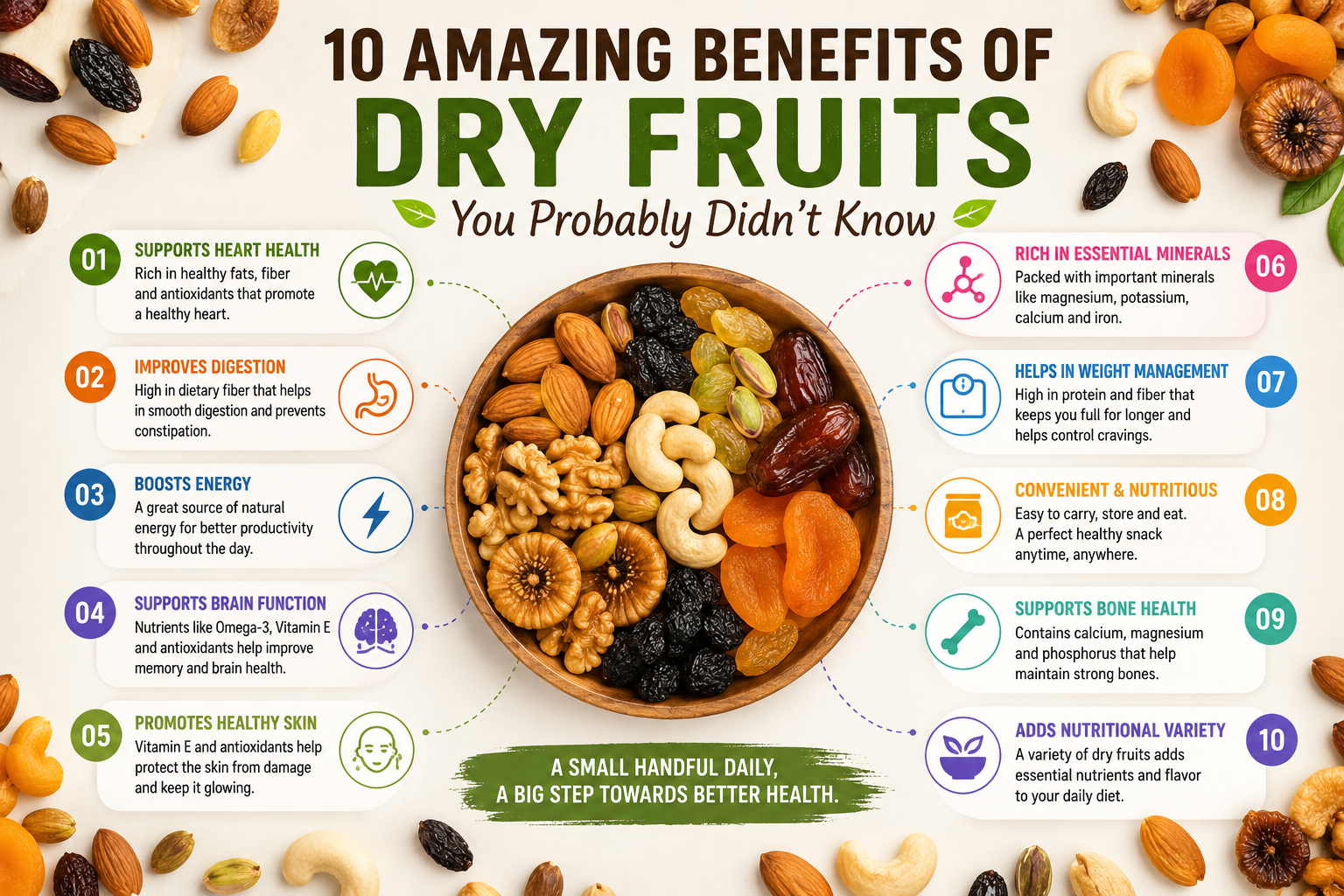
In this article, we’ll explore 10 amazing benefits of dry fruits you probably didn’t know, along with practical tips for adding them to your daily routine.
What Are Dry Fruits?
Dry fruits are fruits or edible plant foods that have had much of their water content removed through natural or controlled drying methods. Common examples include raisins, dates, dried figs, apricots, prunes, and cranberries.
The term is also commonly used in India to describe nuts such as almonds, walnuts, cashews, pistachios, and peanuts. Technically, nuts and dried fruits are different food categories, but they are often grouped together because they are frequently consumed as snacks or ingredients.
Because drying removes water, dried fruits are more concentrated in calories and naturally occurring sugars by weight than fresh fruit. Portion size therefore matters.
1. May Support Heart Health
One of the most interesting benefits of nuts is their potential role in supporting cardiovascular health.
Almonds, walnuts, pistachios, and other nuts contain unsaturated fats, which can be part of a heart-friendly eating pattern. They also provide fiber, magnesium, and plant compounds that contribute to overall nutrition.
Walnuts are particularly notable because they contain alpha-linolenic acid (ALA), a plant-based omega-3 fatty acid.
Adding a small portion of unsalted nuts to a balanced diet may be a better snack choice than many highly processed foods.
2. May Help Improve Digestive Health
Many dried fruits contain dietary fiber, which is important for normal digestion.
Foods such as prunes, figs, raisins, and dried apricots can contribute fiber to your diet. Fiber helps support regular bowel movements and can contribute to a healthy digestive system.
However, because dried fruits are concentrated, eating large amounts at once may cause digestive discomfort for some people.
Tip: Start with a small serving and drink enough water throughout the day.
3. Provides Long-Lasting Energy
Dry fruits can be a convenient source of energy because they contain carbohydrates, healthy fats, and, in many cases, some protein.
Dried fruits such as dates and raisins contain naturally occurring carbohydrates, while nuts such as almonds and cashews provide fats and protein.
This combination can make a small portion useful as a snack between meals, before physical activity, or when you need something convenient while traveling.
4. May Support Brain Function
Nuts are often associated with brain-friendly nutrition because they provide healthy fats, vitamin E, magnesium, and other nutrients.
Walnuts and almonds are especially popular choices. Walnuts provide ALA, while almonds are a good source of vitamin E.
Rather than thinking of one food as a “brain booster,” it is better to include nuts as part of an overall balanced diet containing fruits, vegetables, whole grains, legumes, and adequate protein.
5. Can Support Healthy Skin
Your skin needs a variety of nutrients to maintain its normal structure and function.
Almonds, sunflower seeds, and other nuts and seeds can provide vitamin E, an antioxidant nutrient that helps protect cells from oxidative damage.
Dried fruits also contain different plant compounds depending on the fruit. For example, dried apricots and raisins contain various antioxidant compounds.
Remember that healthy skin depends on more than one food. Hydration, sleep, sun protection, and an overall nutritious diet also matter.
6. Provides Important Minerals
Another lesser-known benefit of dry fruits and nuts is their mineral content.
Depending on the type, they can provide nutrients such as:
- Magnesium
- Potassium
- Copper
- Iron
- Manganese
- Calcium
For example, almonds contain magnesium and calcium, while dried fruits such as raisins and apricots can contribute potassium and other micronutrients.
Including a variety of dry fruits and nuts can therefore help diversify your nutrient intake.
7. May Help With Satiety
Nuts contain a combination of protein, fat, and fiber, which can help you feel satisfied after eating.
Replacing highly processed snack foods with a modest portion of nuts may help create a more balanced snack.
However, nuts are energy-dense, so a small handful is generally enough for a snack. Eating directly from a large packet can make it easy to consume more than intended.
8. Convenient Nutrition for Busy Days
One of the biggest advantages of dry fruits is convenience.
Unlike many fresh foods, properly packaged dry fruits and nuts are easy to carry and can be stored for relatively long periods. They require little or no preparation, making them useful for:
- School or college snacks
- Office breaks
- Travel
- Hiking
- Homemade trail mixes
- Breakfast toppings
- Smoothies
- Desserts and recipes
A small container of unsalted nuts and dried fruit can be an easy alternative to highly processed snack foods.
9. May Support Bone Health
Several nuts and dried fruits provide nutrients involved in maintaining normal bones.
Almonds, for example, contain calcium and magnesium. Magnesium contributes to normal bone health, while calcium is an essential mineral for maintaining bones and teeth.
Some dried fruits also provide minerals that contribute to overall nutritional quality.
Still, bone health depends on your overall diet and lifestyle, including adequate calcium, vitamin D, protein, and physical activity.
10. Adds Nutritional Variety to Your Diet
Perhaps the most underrated benefit of dry fruits is how easily they can make everyday meals more varied.
You can add:
- Chopped almonds to oatmeal
- Walnuts to salads
- Raisins to breakfast cereals
- Dates to homemade energy bites
- Pistachios to yogurt
- Dried figs to smoothies
- Cashews to vegetable dishes
Eating different types of nuts and dried fruits gives you access to different combinations of nutrients and flavors.
Best Dry Fruits and Nuts to Include in Your Diet
Different varieties offer different nutritional profiles. Here are some popular choices:
Almonds
Almonds provide protein, fiber, unsaturated fats, vitamin E, magnesium, and other nutrients. They are one of the most popular nuts for everyday snacking.
Walnuts
Walnuts are well known for their plant-based omega-3 fatty acid, ALA. They also provide protein, fiber, and unsaturated fats.
Pistachios
Pistachios provide protein, fiber, healthy fats, and several vitamins and minerals. Their naturally crunchy texture makes them a popular snack.
Cashews
Cashews contain unsaturated fats, protein, copper, magnesium, and other nutrients. They are also widely used in cooking and desserts.
Raisins
Raisins are dried grapes and contain naturally occurring sugars, fiber, and various plant compounds. Because they are concentrated, portion size is important.
Dates
Dates are naturally sweet and provide carbohydrates, fiber, potassium, and other nutrients. They can be used as a natural sweet ingredient in many recipes.
Dried Figs
Dried figs provide fiber and minerals and can be enjoyed as a snack or added to breakfast dishes.
How Many Dry Fruits Should You Eat Per Day?
There is no single amount that is perfect for everyone because nutritional needs vary based on age, activity level, overall diet, and individual circumstances.
For nuts, a small handful is a commonly used practical serving. For dried fruit, a smaller portion is often appropriate because the fruit’s natural sugars and calories become concentrated when water is removed.
Instead of focusing on eating a large quantity, focus on variety and portion control.
When Is the Best Time to Eat Dry Fruits?
There is no magical time when dry fruits suddenly become healthier. You can enjoy them whenever they fit comfortably into your diet.
Some convenient options include:
In the morning: Add almonds, walnuts, or raisins to oatmeal, cereal, or yogurt.
As a snack: Combine a small portion of nuts with fresh fruit.
Before activity: Dates or raisins can provide convenient carbohydrates.
After activity: Nuts can be combined with other protein-rich foods as part of a balanced meal or snack.
Soaked vs. Unsoaked Dry Fruits: Which Is Better?
You may have heard that soaking almonds or other nuts makes them significantly healthier. Soaking can change their texture and may make them easier for some people to eat, but it does not turn them into a completely different food.
Both soaked and unsoaked nuts can be part of a nutritious diet.
Choose the preparation method you enjoy and can include consistently.
Things to Consider Before Eating Dry Fruits
Although dry fruits and nuts can be nutritious, more is not always better.
Watch Your Portion Size
Nuts are calorie-dense, while dried fruits contain concentrated natural sugars. Large portions can quickly add substantial calories.
Choose Unsalted Options
If possible, choose plain or lightly processed nuts instead of heavily salted varieties.
Check Added Sugar
Some packaged dried fruits contain added sugar, syrups, or other ingredients. Check the nutrition label when buying packaged products.
Consider Allergies
Tree nuts and peanuts can cause serious allergic reactions in some people. Anyone with a known allergy should avoid the relevant foods and follow medical advice.
Store Them Properly
Exposure to moisture, heat, air, and sunlight can affect the quality of dry fruits and nuts. Store them in an airtight container in a cool, dry place. Refrigeration can be useful for extending the quality of some nuts, especially in warm climates.
Frequently Asked Questions About Dry Fruits
Are dry fruits healthy?
Yes. Nuts and unsweetened dried fruits can be nutritious foods when eaten in appropriate portions as part of a balanced diet.
Which dry fruit is best for daily consumption?
There is no single “best” dry fruit. Almonds, walnuts, pistachios, raisins, dates, and dried figs all have different nutritional profiles. Variety is a good approach.
Can dry fruits give you energy?
Yes. Dried fruits provide carbohydrates, while nuts provide fats and protein. Together, they can make a convenient energy-rich snack.
Are dry fruits good for digestion?
Many dried fruits contain dietary fiber, which supports normal digestive function. However, eating too much at once may cause bloating or digestive discomfort.
Should you eat dry fruits every day?
Dry fruits and nuts can be included regularly if they fit your nutritional needs and you maintain sensible portions.
Final Thoughts
Dry fruits and nuts are small foods with a surprisingly diverse nutritional profile. From supporting heart-friendly eating patterns and digestive health to providing energy, fiber, healthy fats, vitamins, and minerals, they can be a valuable addition to a balanced diet.
The key is quality, variety, and moderation. Choose mostly unsalted nuts and dried fruits without unnecessary added sugar, pay attention to portion sizes, and combine them with other nutritious foods.
So, the next time you reach for a handful of almonds, walnuts, raisins, pistachios, or dates, remember that you’re not just enjoying a tasty snack—you’re also adding a range of useful nutrients to your diet.
SEO Keywords
Primary keyword: benefits of dry fruits
Secondary keywords: dry fruits benefits, health benefits of dry fruits, benefits of eating dry fruits, dry fruits and nuts benefits, healthy dry fruits, nutritional benefits of dry fruits, best dry fruits for health, dry fruits for daily diet
Suggested Meta Title
10 Amazing Benefits of Dry Fruits You Didn’t Know
Suggested Meta Description
Discover 10 amazing benefits of dry fruits, including heart, digestion, energy, brain, skin, bone, and nutritional benefits. Learn how to eat dry fruits wisely.
Suggested URL Slug
/benefits-of-dry-fruits/
Suggested Image Alt Text
A healthy selection of almonds, walnuts, cashews, pistachios, raisins, dates, and dried figs